Key takeaways
- Sea salt crystals wick along a cable by capillary action, so creep travels upward and sideways rather than only falling where the spray landed.
- Dry salt is a poor conductor, but it is hygroscopic, and once it pulls moisture from the air it becomes a conductive brine across live pins.
- A drip loop costs nothing and works because water always leaves the cable at the lowest point, which you have deliberately placed below the socket.
- Green or white powdery corrosion on plug pins means the metal itself is gone, so cleaning it back is not a repair and the lead needs replacing.
- A socket or plug that feels warm, or shows browning around a pin, is a fire risk and should be taken out of service the same day.
Pull the return pump plug on a two year old reef system and look at the pins. On most of them you will find a white crust in the gap where the pin meets the plug body, and a faint green tinge on the brass beneath it.
Nobody put salt there. Nothing splashed that high. It climbed, and understanding how it climbed is the whole of this article.
Freshwater keepers get a milder version of this with hard water scale. Marine keepers get the aggressive version, because seawater carries around 35 grams of dissolved salt per liter and every drop that evaporates leaves all of it behind.
How salt gets somewhere nothing splashed
Salt creep starts with fine spray or a wet surface. The water evaporates, leaving a crystal, and the crystal itself is porous.
The next film of moisture wicks into that crystal by capillary action, spreads slightly further than the last, and evaporates in turn. Each cycle extends the deposit a fraction of a millimeter, and it moves happily uphill because capillary action does not care about gravity.
Over months a crust travels 20, 30, 50 cm along a cable sheath. It gathers at every discontinuity: a cable clip, a strain relief, the shoulder of a plug, the slot of a socket.
Why dry salt is not the problem, and then is
Dry sodium chloride barely conducts. If your plug crust stayed genuinely dry it would be cosmetic and nothing more.
It does not stay dry. Salt is hygroscopic, and above roughly 75 percent relative humidity it pulls water straight out of the air and deliquesces into brine. A fish room with an open sump sits well above that most of the time.
Brine across two pins is a leakage path. It is usually small, a few milliamps, which is exactly the range a GFCI or RCD is built to detect, and it is why so many reef tanks develop a device that trips at 4 a.m. in July and behaves all winter. Working out which item is tripping the circuit is the follow up job when that starts.
Never clean, wipe or inspect a plug while it is in the socket. Unplug it, and if the socket face itself is crusted, switch off at the consumer unit or breaker panel before you go near it. Salt bridging live and neutral inside a socket is a short circuit waiting for one drop of condensation.
The drip loop, done properly
A drip loop is a deliberate low point in the cable between the equipment and the socket. Water running down the cable reaches that low point, cannot climb the far side, and drips onto the floor instead of into the outlet.
The rules are simple and people still get them wrong. The lowest point of the loop must sit clearly below the socket, ideally 20 cm or more, and the cable must actually hang rather than being pulled taut by a tie.
- Mount the power strip above the level of the tank rim or the sump, never on the cabinet floor
- Let every cable dip well below its socket before rising to it
- Leave cables loose in the loop, since a cable tie pulled tight defeats the whole arrangement
- Keep the loop clear of the cabinet floor so a spill cannot sit in it
- Fit a strip with individual switches so you can isolate one device without unplugging five
The US Consumer Product Safety Commission has published guidance on aquarium related electrical incidents for years, and the pattern is consistent: the failure point is where cables meet outlets, not the equipment itself. Mounting the strip high also keeps it out of the way when a canister weeps onto the cabinet floor, which is the other way water reaches a socket.
Where creep actually collects
| Location | Why it collects there | Check every |
|---|---|---|
| Plug pin shoulders | Crust wicks along the pin and lodges at the body | 3 months |
| Socket faces | Salt falls from the plug when it is removed | 6 months |
| Strip switch bezels | Gaps around the rocker collect airborne mist | 3 months |
| Controller probe leads | Sensor cable runs from water to dry electronics | 1 month |
| LED fixture vents | Warm air pulls mist into the heatsink slots | 3 months |
| ATO float and optical sensors | Crust changes the switching point | 2 weeks |
The ATO row matters more than it looks. A salt crusted optical sensor on a Tunze Osmolator or similar can read full when the sump is low, and the consequence is a return pump running dry rather than a damp plug.
Cleaning it off without causing a fault
Unplug the item and leave it out of the socket for the whole job. Take it to a bench or a table rather than working inside a cabinet where you cannot see what you are doing.
Dissolve rather than scrape. A cloth dampened, not soaked, in RO or distilled water lifts salt readily because salt is very soluble; tap water leaves its own mineral residue behind. Work the pin shoulders with an old toothbrush and finish with a dry lint free cloth.
Then leave it. A cleaned plug needs at least 24 hours in a warm dry place before it goes back in the socket, because moisture in the gap between pin and body is the exact condition you were trying to remove.
Do not spray water dispersant products into plugs or sockets. Most contain solvents that attack the plastics used in outlets, they leave a residue that traps future salt, and none of them are rated for use on live electrical fittings in a domestic setting.
The corrosion you cannot clean off
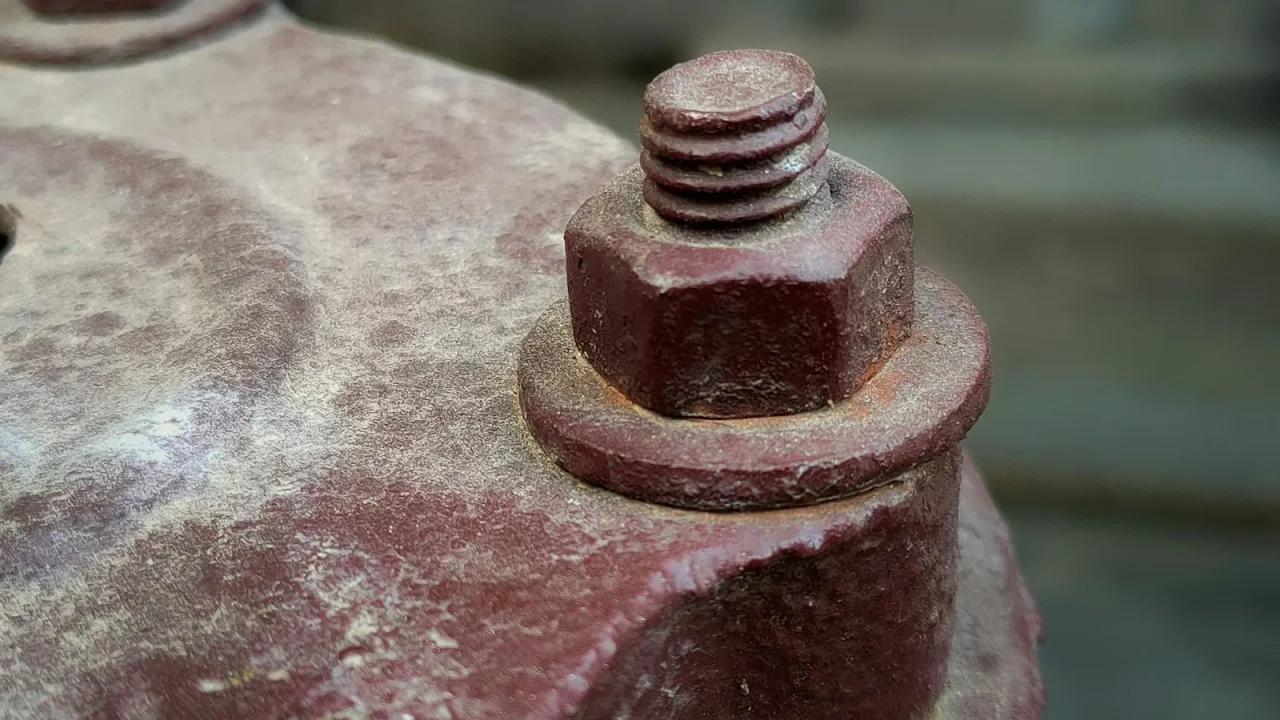
Once chloride has attacked the brass, cleaning removes the crust and leaves you looking at the damage. Pitted grey pins, a green verdigris that returns within weeks, or any browning of the plastic around a pin are all end of life signals.
Corroded pins do not make good contact, and poor contact means resistance, and resistance in a connection carrying a 300 watt heater or a 90 watt return pump produces heat. That is the mechanism behind most aquarium related outlet fires.
Replace the lead if it is a detachable one, or replace the unit if the cable is molded in. A molded plug is not a rewiring job for most people, and cutting one off to fit a new plug on equipment that is only ever going to live in salt spray is rarely the right call. Judge it the way you would any repair against the price of replacement.
What a year of neglect does to a plug
A 400 liter (106 US gallon) mixed reef in a converted garage started tripping its RCD roughly once a fortnight, always in the evening, always in summer. Every unit tested fine individually.
The strip was mounted on the cabinet floor, 15 cm below the sump rim, with no drip loops on any of the eight leads. Three plugs had visible crust and the skimmer plug had a bridge of salt running between live and earth pins that you could see with a flashlight.
Cleaning the plugs, moving the strip to a bracket 40 cm above the sump, and putting a proper loop in every lead ended it. Eighteen months and no trips since. Total cost was a $12 mounting bracket and an afternoon.
Freshwater tanks are not exempt
Hard water leaves calcium and magnesium carbonate rather than sodium chloride, and that scale is far less hygroscopic, so it rarely becomes conductive on its own.
What it does do is hold moisture mechanically and stop plugs seating fully. A crusted pin sitting 1 mm proud of the socket contact still heats up under load, so the mechanical checks in this article apply regardless of what is in your tank.
The habit that helps either way is a monthly glance rather than an annual audit. Fold it into the same routine you use for the rest of the symptom by symptom equipment checks, and it costs about two minutes.
When to call an electrician
Certain findings end the do it yourself part of the job immediately.
- Browning, softening or a burnt smell at any socket or plug body.
- A socket that is warm to the back of your hand with equipment running.
- An RCD or GFCI that still trips once every aquarium item is unplugged.
- Salt or corrosion visible inside the socket itself rather than on the plug.
- Any tingling sensation when you touch the water and a grounded metal object at the same time.
None of those are salt creep problems any more. They are wiring problems that salt creep started, and they want someone with a tester and a certificate rather than a toothbrush.
Marine salinity data, if you want the underlying numbers on what is actually crystallizing out of your water, is published by NOAA Ocean Service. Around 35 parts per thousand is the figure worth remembering, and every liter that evaporates leaves 35 grams of it behind somewhere.
Questions readers ask about this
It causes real faults, though not while it is dry. Sodium chloride absorbs moisture from the air above about 75 percent humidity and turns into conductive brine, which bridges plug pins and leaks a few milliamps to earth. That is precisely the current range a GFCI or RCD detects, which is why summer trips are so common on reef tanks.
Above the water level of both the display and the sump, with 20 cm or more of clearance, and never on the cabinet floor. Mounted high, gravity works for you: water on a cable has to travel upward to reach the socket, which it cannot do once a drip loop gives it a lower place to leave.
Unplug it, take it to a bench, and use a cloth dampened with RO or distilled water plus an old toothbrush on the pin shoulders. Tap water leaves its own mineral deposit. Dry it thoroughly and leave it somewhere warm for at least 24 hours before it goes back into a socket.
Neither, in a domestic setting. Water dispersant sprays contain solvents that attack outlet plastics and leave a film that traps salt. Dielectric grease has legitimate uses in automotive connectors but is not intended for mains plugs, and applying it makes any later inspection harder. Drip loops and dry mounting do the job better.
Yes. The deposit is different, calcium and magnesium carbonate rather than sodium chloride, and it is much less likely to become conductive. The mechanical risk is identical though: crust stops a plug seating fully, poor contact creates resistance, and resistance under the load of a 300 watt heater generates heat at the pin.