Key takeaways
- PAR counts photons between 400 and 700 nanometres, the band plants photosynthesise with, and ignores how bright the light looks to you.
- A PAR figure without a stated measuring distance is a marketing claim rather than a specification.
- Low light plants want 15 to 30 PAR at the substrate, medium 30 to 50, and high 50 to 80.
- Raising a fixture is the cheapest intensity control you have, because light falls off with the square of distance.
- Pushing PAR above roughly 50 without injected carbon dioxide reliably produces algae rather than growth.
The most expensive mistake in this hobby is buying a brighter fixture to save a dying plant.
Nine times out of ten the plant is short of carbon or nitrogen rather than photons, and extra light simply hands the surplus to algae. The tenth time the fixture really is too weak. PAR is how you tell which case you are in.
Everything below assumes a freshwater planted tank and a reading taken at the substrate, because that is where the argument always ends up.
What the number is counting
PAR stands for photosynthetically active radiation. It counts photons in the 400 to 700 nanometre band, the range chlorophyll can drive photosynthesis with, and ignores everything outside it.
The unit is micromoles of photons per square metre per second. A mole of photons is a fixed count, so PAR is a rate of photon delivery onto a surface, not a measure of brightness as your eye judges it.
That distinction is the reason the number is useful. Two fixtures that look equally bright to you can differ by a factor of two at plant level.
Why lumens and lux mislead
Lumens and lux are weighted by the human eye’s response curve, which peaks near 555 nm in the green. Green is roughly the band plants reflect, which is why leaves are green in the first place.
A fixture heavy in green and yellow output will post impressive lumen figures and mediocre PAR. A fixture with strong deep red and royal blue diodes does the opposite and can look dim while growing plants hard.
If a listing quotes only lumens, it is telling you how the tank will look to you and nothing about how it will look to a Rotala. The related habit of quoting wattage is dismantled in why the wattage rule stopped predicting growth.
Where the reading has to be taken
A PAR figure without a stated distance is not a specification, it is a marketing claim. Manufacturers commonly measure at 15 cm below the lens, in air, directly on the centre line.
The reading a plant experiences is taken underwater, at the substrate or at the leaf, with the sensor facing up and the fixture at its normal mounted height. Those two numbers can differ by 70 percent or more on a deep tank.
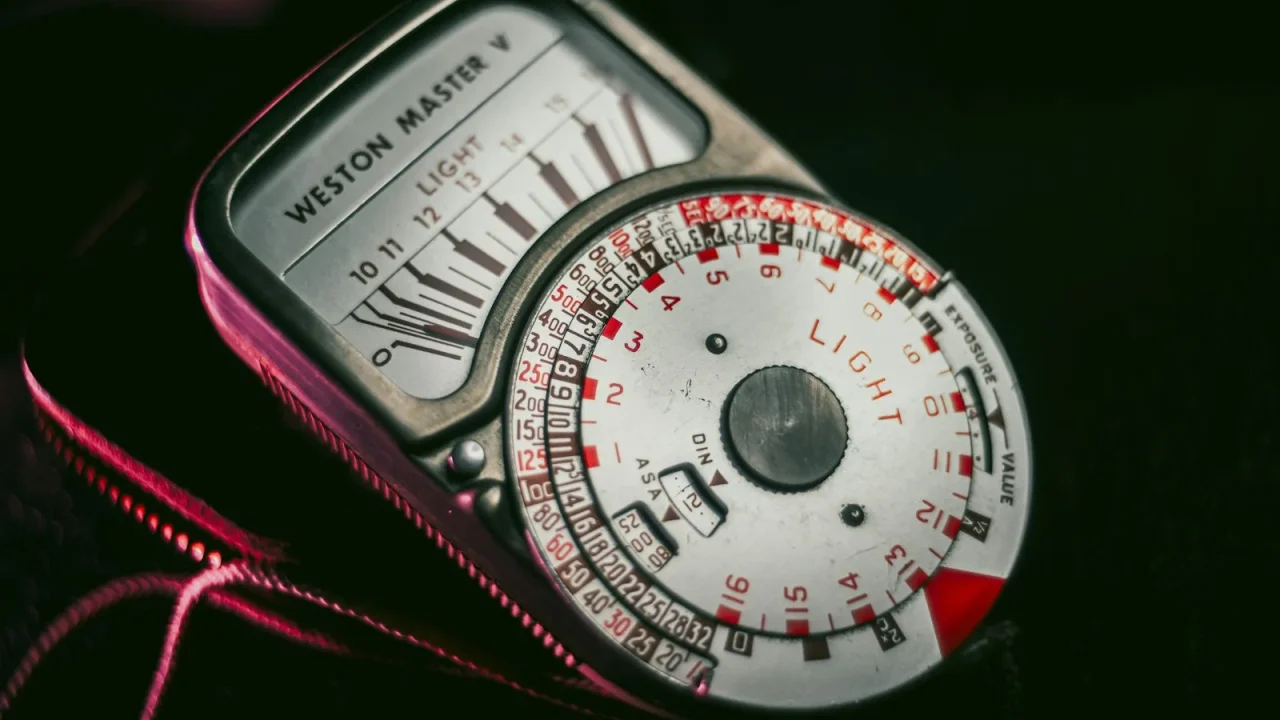
Sensor type matters as well. An aerial quantum sensor used underwater reads high because of the immersion effect, which is why underwater models like the Apogee MQ-510 carry a correction factor. Apogee document the effect and the correction in their published sensor material at Apogee Instruments.
PAR ranges by plant demand
These bands come from measurements at substrate level in freshwater planted tanks. Boundaries between them are soft, and different growers place them 5 to 10 units apart in either direction.
| Band | Substrate PAR | Carbon dioxide | Typical planting |
|---|---|---|---|
| Low | 15 to 30 | Not needed | Anubias, Java fern, mosses, Bucephalandra |
| Medium | 30 to 50 | Helpful, not required | Cryptocoryne, Amazon sword, Ludwigia, Vallisneria |
| High | 50 to 80 | Strongly recommended | Carpets, Rotala, Alternanthera |
| Very high | 80 to 120 | Required | Competition scapes, Rotala macrandra, red carpets |
Below about 15 PAR very little grows well and most stem plants simply stretch toward the surface. Above about 100 PAR the tank becomes a full time job, and the margin for a missed fertiliser dose shrinks to a few days.
Which species belongs in which band is set out species by species in the plant demand reference table, including the ones that are commonly filed in the wrong place.
Distance does what wattage cannot
Light spreading from a source falls off with the square of distance. Move a fixture from 20 cm above the water to 40 cm and you are not looking at half the light at the substrate, you are looking at roughly a quarter of it before water absorption is even counted.
This is the single most powerful adjustment on a planted tank, and it is free. A hanging kit costing $20 to $40 gives finer control over substrate PAR than a $300 fixture upgrade does.
The practical range is wide. On one 45 cm deep tank I took substrate readings of 78, 44, and 29 PAR at mounting heights of 10 cm, 25 cm, and 45 cm above the rim, using the same fixture at the same output.
Raise before you dim. Raising a fixture reduces intensity and widens coverage at the same time. Dimming reduces intensity and leaves the hotspot exactly where it was.
What the water itself takes
Clear water absorbs light gradually, and red wavelengths go first. By 60 cm of depth a noticeable share of the deep red has been absorbed, which is part of why plants at the bottom of tall tanks look different from the same species near the surface.
Tannins accelerate everything. A tank with a large piece of freshly added Malaysian driftwood can lose 20 to 30 percent of its substrate PAR to the tea colour alone until the wood is leached out.
Surface agitation, floating plants, and a dirty cover glass each take their share. A cover glass with hard water spotting can cost 10 to 15 percent, and cleaning it is a five minute job people never think to do. Deep tanks compound all of this, which is why lighting a tall water column is a different exercise from lighting a standard one.
Estimating PAR without a meter
A quantum meter is the honest answer and an Apogee MQ-510 runs around $400 to $500, which is more than most people’s fixture. Aquarium clubs frequently own one and lend it out.
Failing that, a phone lux meter app gives a very rough guide. For a neutral white LED, dividing lux by somewhere between 55 and 75 lands you in the right neighbourhood, but the conversion shifts badly with spectrum and the figure is worthless on a heavily blue or red fixture.
The most reliable free method is plant behaviour. Stems that stretch with long gaps between leaf nodes are short of light. Compact growth with algae on the older leaves is the other end.
PAR without carbon is a trap
Photosynthesis needs light, carbon, and nutrients in balance. Raise light alone and plants hit a carbon ceiling within days, growth plateaus, and the unused light energy fuels whatever else is in the tank.
This is the mechanism behind most algae outbreaks that follow a fixture upgrade. The new light did not cause algae directly. It raised demand past what the tank could supply.
In practice anything above about 50 PAR at the substrate wants injected gas to stay stable. Between 30 and 50 you can usually manage with careful dosing and patience.
Choosing a fixture from a PAR target
Work backwards. Decide your hardest plant, find its PAR band, measure your water depth, then look for a fixture with published readings at that depth rather than at 15 cm.
Reputable planted lighting brands publish PAR charts at several depths. If a manufacturer publishes none at all, assume the fixture is weaker than it looks, and there is more on matching output to depth in picking a fixture from your tank’s depth.
One more thing gets overlooked at the buying stage. A fixture delivering 60 PAR at the centre and 20 at the corners is not a 60 PAR fixture, and the difference between coverage and raw output is worked through in how spread and intensity trade against each other.
If you take one reading, take it at the front corner of the substrate, not the centre. The dimmest planted spot in the tank decides what you can grow, and everyone measures the brightest.
PAR is a measurement, not a target to maximise. The right number is the lowest one that grows what you want, because every unit above that is an invitation to something you did not plant. Where it sits alongside colour temperature and daily hours is set out in the full account of how aquarium lighting is specified.
Questions readers ask about this
Match it to your hardest plant rather than your easiest. Anubias, Java fern, and mosses run happily on 15 to 30 PAR at the substrate. Swords and Cryptocoryne want 30 to 50. Carpets and red stems need 50 to 80 and pressurised carbon dioxide to use it safely.
Only roughly. Phone sensors report lux, and converting lux to PAR for a neutral white LED means dividing by somewhere between 55 and 75. That conversion collapses on heavily blue or red fixtures, and phone sensors are uncalibrated, so treat any result as a category check rather than a measurement.
For most carpeting species, no. Monte Carlo and dwarf hairgrass want 40 to 60 PAR at substrate level to spread horizontally. At 30 PAR they grow upward instead, then the shaded base rots and lifts in sheets. Marsilea hirsuta is the realistic substitute at that level.
Yes, and it surprises people every time. On one 45 cm deep tank I recorded 78, 44, and 29 PAR at the substrate with the same fixture mounted 10 cm, 25 cm, and 45 cm above the rim. That is a three band swing from a bracket adjustment costing nothing.